





The modern job market is evolving rapidly, driven by technological advancements, globalization, and changing employer expectations. Traditional degree-based hiring is giving way to a skills-first approach, where practical abilities matter as much as academic qualifications. This shift makes professional skills for students more important than ever, especially between 2025 and 2030, when automation and AI will redefine many roles. Professional skills for students refer to a balanced combination of soft skills like communication, teamwork, and adaptability, along with hard skills such as digital literacy and technical expertise. Despite increasing education levels, only 54.81% of Indian graduates are considered employable, highlighting a significant skills gap. To stay competitive in this dynamic environment, students must begin developing these professional skills early, ensuring they are prepared not just to secure jobs, but to grow and succeed in their careers.
The Growing Demand for Professional Skills for Students
The demand for professional skills for students is rising rapidly as employers rethink how they evaluate talent.
Shift from Degree-Based to Skill-Based Hiring
Today, organizations are moving beyond traditional qualifications and focusing on what candidates can actually do. Employers increasingly prioritize practical abilities, problem-solving, and adaptability over degrees alone. In fact, studies show that 92% of hiring professionals value soft skills equally or more than hard skills, emphasizing the importance of communication, teamwork, and emotional intelligence in the workplace.
Rapid Changes in Job Market
The job market is evolving at an unprecedented pace. It is estimated that 39% of core skills will change by 2030, driven largely by technological disruption. Artificial intelligence and automation are transforming job roles, making it essential for students to continuously update their skill sets.
Rise of Skill-Based Economy in India & Globally
India and the global economy are steadily shifting toward a “skill-first” model. Employability rates are projected to rise to around 56% by 2026, reflecting growing awareness of skill development.
Increase in the Number of Professional Skills for Students
The number of professional skills for students required in today’s workforce is steadily increasing, reflecting the complexity of modern careers.
Why the Number of Required Skills is Increasing
Several factors are driving this shift. First, job roles are becoming more multi-disciplinary, requiring knowledge across different fields rather than expertise in just one area. Second, global competition has intensified, meaning students must stand out with diverse and well-rounded abilities. Third, rapid technology integration, including AI, data analytics, and automation tools, demands that students continuously upgrade their technical and digital skills alongside traditional competencies.
Evolution from Traditional Skills to Modern Skills
In the past, academic knowledge alone was often sufficient to secure employment. Today, however, employers seek hybrid skill sets that combine technical expertise with interpersonal abilities like communication, collaboration, and critical thinking. This shift highlights the growing importance of adaptability in a dynamic work environment.
Impact of AI and Automation
With nearly 30% of tasks in knowledge-based jobs being automated, the demand for uniquely human skills—such as creativity, emotional intelligence, and problem-solving—is rapidly increasing.
Types of Professional Skills for Students
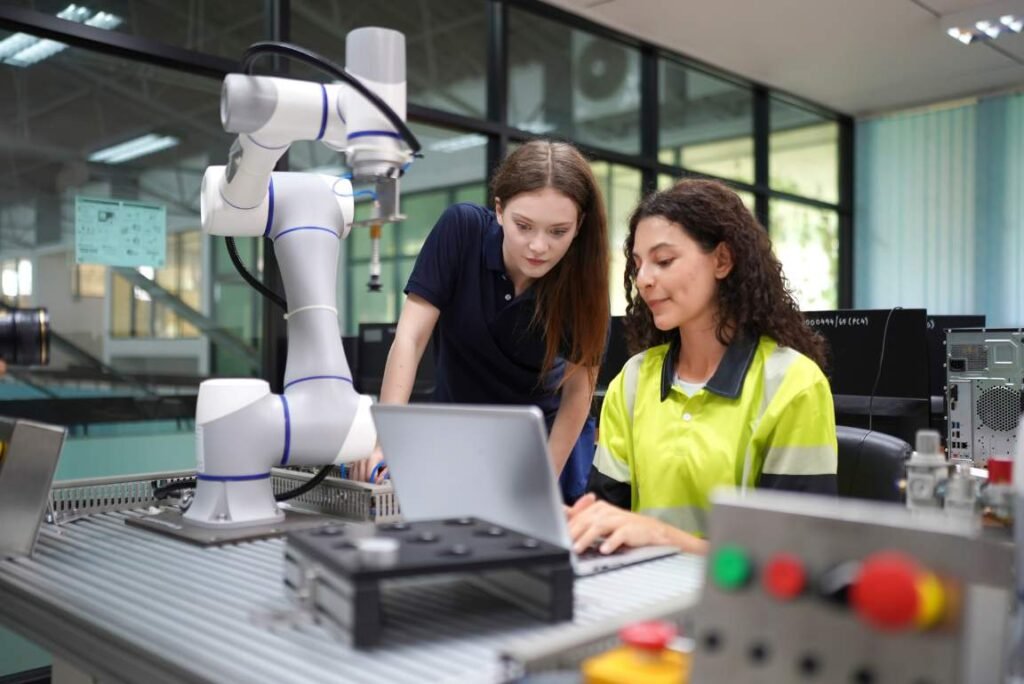
To succeed in today’s competitive environment, students must develop a diverse range of professional skills that go beyond academic knowledge. These skills can be broadly categorized into several key areas.
Soft Skills (Human Skills)
Soft skills are essential for effective interaction and collaboration in the workplace. Strong communication skills help students express ideas clearly, while leadership enables them to guide teams and take initiative. Emotional intelligence allows individuals to understand and manage emotions, both their own and others’. Additionally, adaptability is crucial in handling change, and teamwork ensures smooth collaboration in group settings.
Hard Skills (Technical Skills)
Hard skills are job-specific and measurable abilities. These include data analysis, which helps in decision-making, and digital literacy, a fundamental requirement in almost every field. Basic knowledge of AI and machine learning is becoming increasingly valuable, along with coding or domain-specific tools relevant to particular industries.
Transferable Skills
Transferable skills can be applied across various roles and industries. Skills like problem-solving, critical thinking, and time management enable students to perform efficiently in different situations and adapt to new challenges.
Emerging Skills in 2025+
As industries evolve, new skills are gaining importance. AI literacy, cybersecurity awareness, UX/UI design, and risk management are becoming essential for future-ready careers.
Top Professional Skills for Students in 2026 and Beyond
As the global workforce continues to evolve, certain professional skills for students are becoming essential for long-term success. According to global insights from the World Economic Forum, the demand for both cognitive and interpersonal skills is rapidly increasing.
Analytical thinking remains one of the most critical skills, enabling students to evaluate information, solve complex problems, and make informed decisions. Alongside this, creativity is highly valued, as it drives innovation and helps individuals approach challenges with fresh perspectives.
In an unpredictable job market, resilience and flexibility are crucial. Students must be able to adapt to change, learn from setbacks, and stay productive in dynamic environments. Similarly, active learning and curiosity encourage continuous skill development, ensuring students remain relevant as industries evolve.
With the rise of digital transformation, technology literacy has become a fundamental requirement. Understanding digital tools, AI, and data systems is no longer optional but essential. At the same time, human-centric skills like empathy and communication are equally important, helping students build strong relationships and collaborate effectively in diverse workplaces.
The Skills Gap: A Major Challenge
The growing emphasis on professional skills for students has also highlighted a critical issue—the widening skills gap. This gap poses a significant challenge for both students and employers in today’s competitive job market.
What is the Skills Gap?
The skills gap refers to the difference between what employers expect from candidates and the actual capabilities students possess. While many students graduate with strong theoretical knowledge, they often lack the practical and professional skills required to perform effectively in real-world job roles.
Key Statistics
Recent data highlights the severity of this issue. Nearly 1 in 2 graduates are not job-ready, indicating a major disconnect between education and employability. Additionally, only 8.25% of graduates work in roles that match their qualifications, suggesting that many students are either underprepared or forced to take jobs outside their field of study.
Reasons Behind the Gap
Several factors contribute to this gap. An outdated curriculum that does not align with industry needs limits skill development. The lack of practical exposure, such as internships and real-world projects, further reduces job readiness. Moreover, weak soft skills, including communication and teamwork, hinder students’ ability to succeed in professional environments.
Importance of Professional Skills for Students
Developing professional skills for students is essential in today’s competitive and ever-changing job market. These skills play a crucial role in shaping a student’s career and overall personal growth.
One of the primary benefits is that professional skills significantly improve employability. Employers are more likely to hire candidates who demonstrate strong communication, problem-solving, and teamwork abilities alongside academic knowledge.
Additionally, these skills contribute to enhanced career growth. Students who possess a well-rounded skill set are better equipped to take on new responsibilities, adapt to different roles, and progress quickly in their careers.
Professional skills also help in building confidence. When students can effectively communicate their ideas and handle challenges, they develop a stronger sense of self-assurance, which is vital in professional settings.
Moreover, these skills play an important role in networking and leadership. The ability to collaborate, connect with others, and lead teams opens up new opportunities and strengthens professional relationships.
Finally, professional skills support adaptability in uncertain job markets. With industries constantly evolving, students who can learn, unlearn, and relearn will be better prepared to navigate change and sustain long-term success.
Role of Technology in Skill Development
Technology plays a vital role in enhancing professional skills for students by making learning more accessible, flexible, and effective. E-learning platforms provide students with access to a wide range of courses, allowing them to learn at their own pace. AI-powered learning tools offer smart recommendations, real-time feedback, and adaptive content based on individual performance. Additionally, virtual internships enable students to gain practical experience remotely, bridging the gap between theory and practice. Personalized learning paths further help students focus on their strengths and areas of improvement, ensuring continuous and targeted skill development in a competitive environment.
Future Trends in Professional Skills for Students
The future of professional skills for students is shaped by rapid innovation and evolving workplace demands. One key trend is the growing importance of lifelong learning, as students must continuously update their skills to remain relevant in dynamic industries. The rise of micro-credentials is also transforming education, allowing learners to gain specialized knowledge through short, targeted courses.
Another significant trend is the emergence of hybrid careers, where students combine expertise in technology, business, and creativity to stay competitive. Additionally, increasing global workforce competition means students must develop diverse, high-level skills to stand out internationally. These trends highlight the need for adaptability and continuous growth.
FAQs – Professional Skills for Students
1. What are professional skills for students?
Professional skills for students are a combination of soft skills (like communication and teamwork) and hard skills (like technical knowledge) that help them succeed in their careers.
2. Why are professional skills important for students?
They improve employability, enhance career growth, and help students adapt to changing job market demands.
3. Which professional skills are most in demand?
Skills like analytical thinking, communication, adaptability, technology literacy, and problem-solving are highly valued.
4. How can students develop professional skills?
Students can build these skills through internships, online courses, group projects, and practical experiences.
5. Are soft skills more important than hard skills?
Both are equally important. Employers look for a balance of technical expertise and interpersonal abilities.
Conclusion
In today’s fast-changing world, developing professional skills for students is no longer optional it is essential for career success. As industries evolve and competition increases, students must go beyond academic knowledge and focus on building a diverse skill set. These skills have become the new currency of success, enabling individuals to secure opportunities, grow professionally, and adapt to change.
To stay ahead, students must embrace a mindset of continuous learning, constantly upgrading their abilities and staying aligned with industry trends. By investing in both technical and soft skills early on, students can build a strong foundation for a successful and future-ready career.